Commercial refrigeration: EFET guidance on food safety
Notify EFET if a cyberattack could affect refrigeration, and withdraw products where food safety may have been compromised. The 24-hour warning to the cybersecurity authority applies to entities covered by NIS2.
Update 13.11.2026 · 15:18, Athens time — What changed
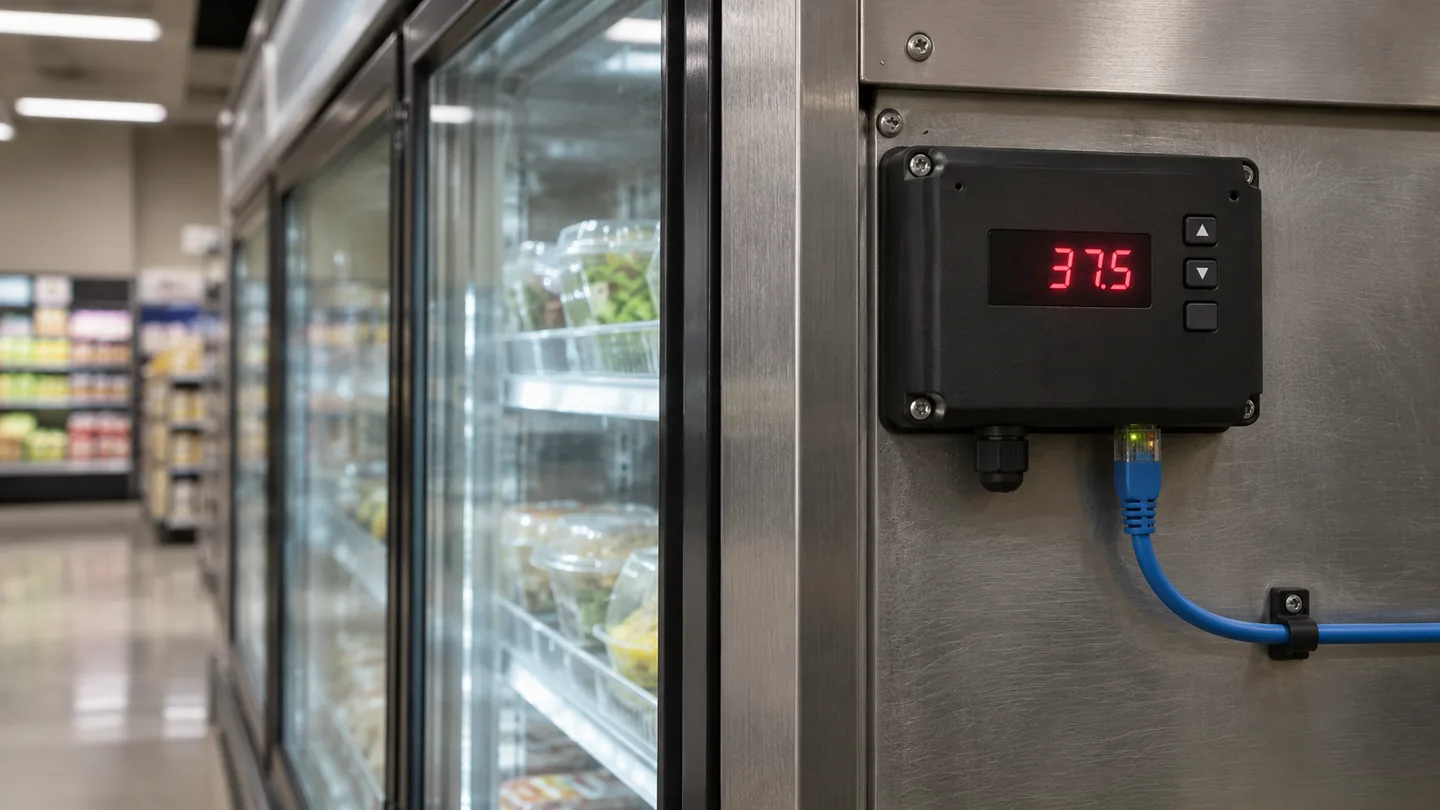
On 13 November, EFET asked food businesses to notify it when a cyberattack affects, or could affect, refrigeration and the safety of their products. If interrupted cooling may have affected food safety, businesses must withdraw the affected products from the market. The guidance also covers retailers such as butcher shops and supermarkets.
The 24-hour early-warning requirement for a significant incident applies to entities covered by Law 5160/2024, the NIS2 framework. The National Cybersecurity Authority provides separate forms for the initial warning and subsequent reports. Existing protective guidance includes disconnecting controllers from the public internet, allowing remote access through a secure VPN with multifactor authentication, changing default passwords, and updating or replacing older equipment.
Archive — previous coverage and cybersecurity announcements
Updated 10 November 2026 · 00:27, Athens time — What changed
On 9 November, the French foreign ministry attributed the campaign targeting refrigeration controllers to the Shahid Kaveh unit, which it links to Iran’s Revolutionary Guards. According to the ministry, the campaign on the night of 11–12 October targeted controllers installed at more than 700 retail sites in France.
France said it would summon the Iranian ambassador and propose new sanctions to its European partners. The statement does not link the attacks in France to the reported faults in Greece. The Greek National Cybersecurity Authority’s guidance on securing equipment remains below.
Previous coverage
Greece’s National Cybersecurity Authority restated its advice on commercial refrigeration controllers on 5 November after reports of faults at food shops, mainly butcher shops. These devices let businesses and maintenance providers monitor refrigeration systems and change their settings remotely.
What has been confirmed
The authority said maintenance technicians reported finding unauthorised changes to settings and attributed them to a cyberattack. At the time of its statement, the authority said it had no officially recorded incident linked to those reports. The more than 300 systems it identified in Greece in its 14 October warning were exposed to the internet. The figure measures exposure and does not establish how many systems were compromised.
Practical steps for businesses
The authority advises removing public internet access to older or unpatched controllers. If remote access is needed, it should be allowed only through a secure private connection (VPN). It also recommends changing passwords, using multifactor authentication, applying security updates and planning to replace older equipment. Businesses should know which service providers have access and train staff to recognise unusual system behaviour.
English translation of the Greek edition · Read in Greek