2026 Nobel Prize in Medicine awarded to Deisseroth, Hegemann and Nagel for optogenetics
The method uses light-gated ion channels to control selected nerve cells with light and has transformed research into the living brain.
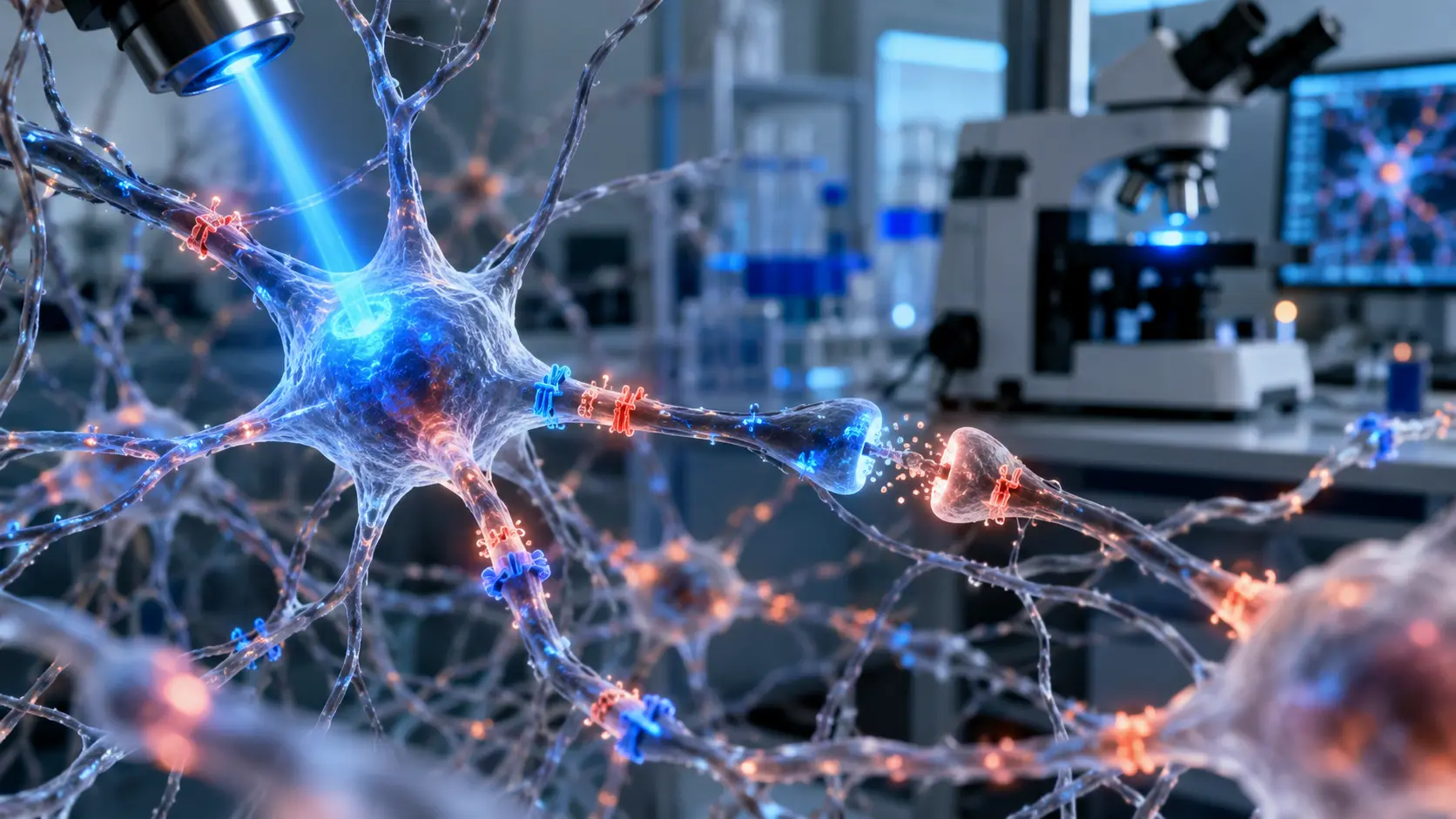
Karl Deisseroth, Peter Hegemann and Georg Nagel have jointly received the 2026 Nobel Prize in Physiology or Medicine, the Nobel Assembly at Karolinska Institutet announced on Monday, 5 October.
The official citation recognises their discoveries concerning light-gated ion channels and optogenetics, a method that enables researchers to activate or inhibit selected nerve cells using light.
From an alga to control of nerve signals
Hegemann and Nagel studied channelrhodopsin, a protein from a single-celled alga that opens an ion channel when illuminated. The resulting ion flow generates an electrical signal and can make a cell sensitive to light.
Deisseroth introduced the protein's gene into nerve cells and showed that blue light could trigger a neural signal. This development led to optogenetics, which allows researchers to observe and control selected neural circuits in a living organism.
What it means for research
The method is used to map circuits linked to memories, emotions and behaviour. The official announcement also refers to research into potential uses such as restoring sight, but this does not mean that optogenetics is already an established treatment.
The prize carries an award of 12 million Swedish crowns and opens the 2026 week of Nobel announcements.
English translation of the Greek edition · Read in Greek